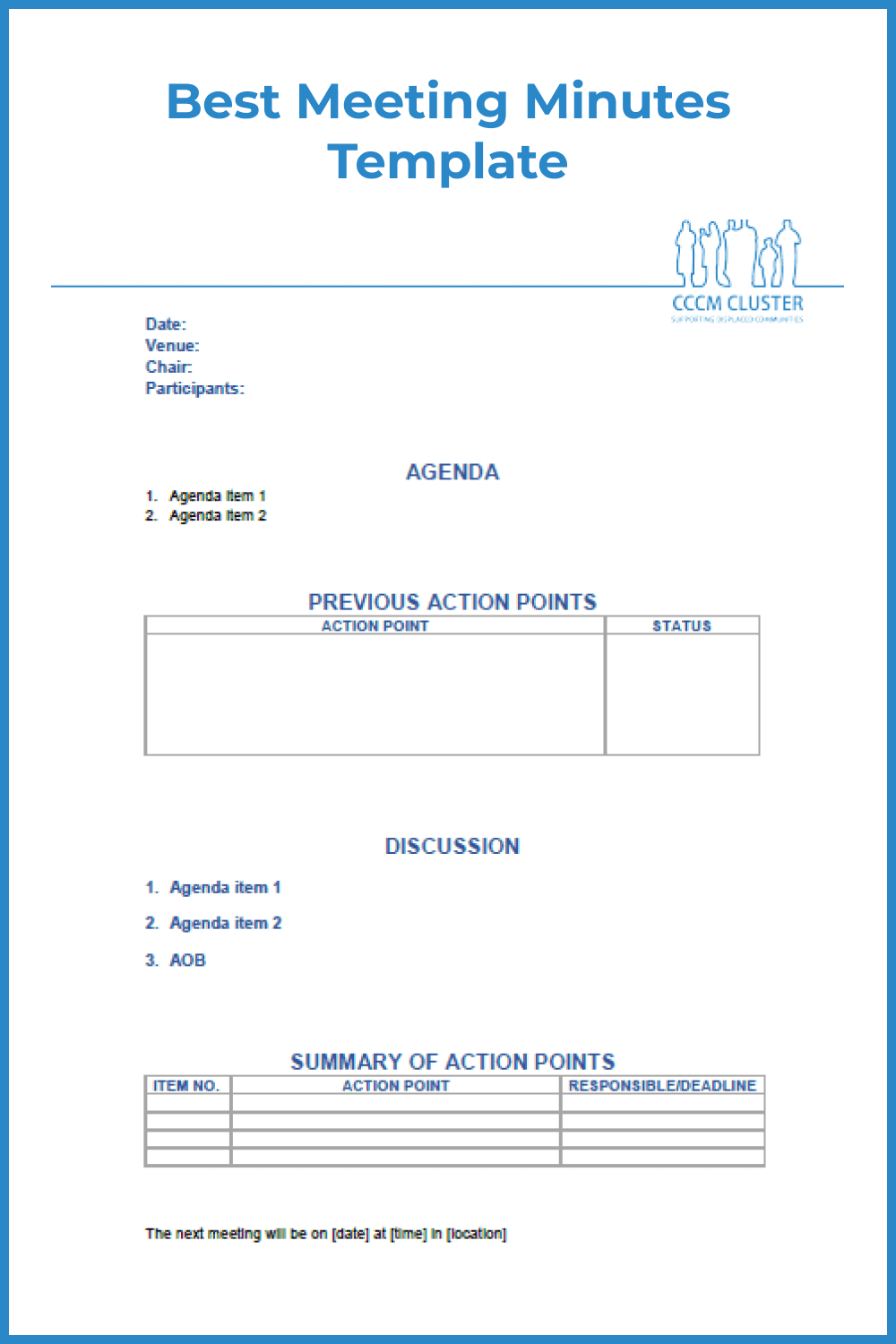
Effective meeting management is crucial for any team or organization. However, simply having a meeting doesn't guarantee a productive session. The key to maximizing efficiency and achieving desired outcomes lies in meticulously documenting the discussion and action items. That's where the "Taking Minutes In A Meeting Template" comes in – a structured approach to capturing key information during meetings, ensuring everyone is on the same page and accountability is maintained. This template provides a framework for recording crucial details, fostering clear communication, and ultimately, driving results. It's more than just a checklist; it's a tool for strategic planning and continuous improvement. Taking Minutes In A Meeting Template is designed to streamline the process, reducing post-meeting fatigue and maximizing the value of each meeting. It's a fundamental skill for leaders and team members alike, contributing to a more organized and successful workflow. Let's explore how to implement this template effectively.
Understanding the Importance of Meeting Documentation
Before diving into the template itself, it's vital to understand why meticulous documentation is so important. Poorly documented meetings often lead to confusion, duplicated efforts, missed deadlines, and ultimately, a lack of accountability. When important decisions are made and action items are assigned, without a clear record, it's easy for things to fall through the cracks. Furthermore, relying solely on verbal recollections can be unreliable, leading to misinterpretations and conflicting information. A well-structured template provides a reliable foundation for capturing the essence of a meeting, ensuring everyone understands the agreed-upon outcomes. Investing time in creating and utilizing a template demonstrates a commitment to process and a desire to improve team performance. The benefits extend beyond simply recording information; it fosters a culture of transparency and shared understanding.
The "Taking Minutes In A Meeting Template" – A Step-by-Step Guide
This template is designed to be adaptable to various meeting types and sizes. It's a starting point; feel free to customize it to fit your specific needs. The core structure focuses on capturing key information in a clear and concise manner. Here's a breakdown of each section:
1. Meeting Identity & Date
- Meeting Title: Clearly state the meeting's purpose.
- Date & Time: Record the exact date and time of the meeting.
- Location: Specify the physical or virtual location.
- Attendees: List all participants.
2. Agenda Items
- Item #: Assign a unique number to each agenda item.
- Topic: Briefly describe the topic being discussed.
- Presenter: Identify the person responsible for presenting the information.
- Status: Indicate the current status of the item (e.g., Proposed, Discussed, Approved, Action Required).
3. Key Discussion Points
- Description: Provide a concise summary of the discussion.
- Key Arguments/Points: List the main arguments or points raised during the discussion.
- Stakeholders Involved: Note who was involved in the discussion.
- Questions/Concerns: Record any questions or concerns raised by participants.
4. Decisions & Action Items
- Decision: Clearly state the decision made.
- Action Item #: Assign a unique number to each action item.
- Description: Provide a detailed description of the action item.
- Owner: Identify the person responsible for completing the action item.
- Due Date: Set a deadline for completion.
- Status: Track the progress of the action item (e.g., To Do, In Progress, Completed).
5. Notes & Observations
- Additional Notes: Include any relevant observations, insights, or context that didn't fit into the other sections.
- Key Takeaways: Summarize the most important takeaways from the meeting.
- Next Steps: Outline the next steps required to move forward.
Utilizing the Template Effectively – Examples
Let's look at how to apply this template in practice. Consider a project kickoff meeting. Here's how it might look:
- Meeting Identity & Date: Project Phoenix Kickoff – October 26, 2023
- Agenda Items:
- Project Scope & Objectives – Discussed and agreed upon.
- Roles & Responsibilities – Defined roles and responsibilities for each team member.
- Timeline & Milestones – Initial timeline established.
- Budget Allocation – Initial budget proposal reviewed.
- Key Discussion Points: The team discussed the project's overall goals and how they align with the company's strategy. Several team members raised concerns about the complexity of the initial scope. The budget was a key point of discussion, with some members suggesting a phased approach.
- Decisions & Action Items:
- Decision: Project scope is finalized and approved.
- Action Item #1: Sarah Miller – Create a detailed project plan by November 9, 2023.
- Action Item #2: John Davis – Research potential vendors for software licensing by November 16, 2023.
- Notes & Observations: The team agreed to hold a follow-up meeting in two weeks to review the project plan. There was a lot of enthusiasm for the project, but some team members expressed concerns about potential roadblocks.
- Next Steps: Schedule the follow-up meeting and distribute the project plan to all team members.
The Role of Technology in Meeting Documentation
While a manual template is effective, technology can significantly enhance the process. Tools like Google Docs, Microsoft Word, or dedicated meeting note-taking apps allow for real-time collaboration, easy sharing, and version control. These tools also often include features for generating summaries and action item tracking. Consider using a tool that allows for the easy creation of checklists and task assignments. Furthermore, integrating meeting recordings into the documentation process ensures that all participants have access to the same information.
Beyond the Template: Continuous Improvement
The "Taking Minutes In A Meeting Template" is not a static document. It should be reviewed and updated regularly to reflect changes in processes, team dynamics, and project requirements. Solicit feedback from participants to identify areas for improvement. Track the effectiveness of the template – are action items being completed? Are decisions being followed? Adjust the template as needed to optimize its impact. A commitment to continuous improvement is essential for maximizing the value of meeting documentation.
Conclusion
Taking Minutes In A Meeting Template is a powerful tool for improving meeting effectiveness and driving organizational success. By implementing a structured approach to documentation, teams can ensure clarity, accountability, and informed decision-making. The template provides a solid foundation, but its effectiveness hinges on consistent use and adaptation to specific needs. Remember that the goal isn't just to record information; it's to leverage that information to achieve tangible results. Investing time in creating and utilizing a well-designed template is an investment in a more productive and successful future. Ultimately, a proactive approach to meeting documentation fosters a culture of transparency, collaboration, and continuous improvement. Taking Minutes In A Meeting Template is a valuable asset for any organization striving to optimize its meeting processes.
0 Response to "Taking Minutes In A Meeting Template"
Posting Komentar